Home › Guides › MHCP explained
MHCP and Insulin Sensitivity: The Cinnamon Compound Behind Cinna Shield
Updated November 5, 2026 · 5 min read
The short answer
MHCP is the name given to a compound in cinnamon that, in laboratory studies, made fat cells respond as if insulin were present. It is the idea behind Cinna Shield’s “help the cell door open again” explanation. The lab work is real. The studies in people are mixed. Below is what each one says, so you can judge it like an adult.
The lock and the key
Insulin is the key. The cell is the door. Glucose is what needs to get in. In insulin resistance the key still turns, because your body still makes insulin, but the door answers less and less. Glucose stays in the blood. That is the picture Cinna Shield uses, and as a description of insulin resistance it is fair.
Where MHCP comes from
Around 2001, researchers working with the U.S. Department of Agriculture’s nutrition labs reported that a water-soluble compound from cinnamon, which they called methylhydroxychalcone polymer (MHCP), acted like insulin in cultured fat cells: it increased glucose uptake and switched on parts of the same signaling chain. A few years later the same group described the active compounds more precisely as type-A polyphenol polymers. Different name, same finding: something in cinnamon talks to the insulin pathway, at least in a dish.
What the studies in people found
| Study | What it found |
|---|---|
| 2003 trial, 60 adults with type 2 diabetes (Diabetes Care) | 1 to 6 g of cinnamon a day for 40 days lowered fasting glucose by roughly 18 to 29 percent. |
| 2013 meta-analysis of 10 trials (Annals of Family Medicine) | Cinnamon lowered fasting glucose on average. It did not show a significant effect on A1C. |
| 2012 Cochrane review of 10 trials | Concluded there was not enough evidence to recommend cinnamon for diabetes. |
Two honest notes. First, most of these trials used Cassia powder, not a concentrated Ceylon extract, so they don’t test Cinna Shield itself. Second, the American Diabetes Association does not recommend cinnamon as a treatment. Cinna Shield is a dietary supplement, not a treatment, and it should be read that way.
How Cinna Shield uses the idea
- Species. DNA-verified Ceylon (Cinnamomum verum), not Cassia. Ceylon is naturally very low in coumarin, which matters if you take it every day. See Ceylon vs. Cassia.
- Concentration. A 12:1 extract. The maker states one capsule equals 7,200 mg of raw bark, an amount you would not eat as powder every day.
- Carrier. MCT oil, because many of cinnamon’s compounds are fat-soluble. See the ingredients.
- Routine. One capsule in the morning, every day.
The four steps, in plain words
- Unlock: support the cell’s response to the insulin you already produce.
- Clear: glucose that enters the cell is used as fuel instead of circulating.
- Steady: a flatter curve after meals means less of the crash and fewer cravings.
- Protect: Ceylon’s polyphenols act as antioxidants.
That is the maker’s model of how the formula works. It is a reasonable reading of the lab research, not a clinical result for the product.
How to find out if it works for you
The same way a researcher would: measure before, take it every day, measure after. The 90-day guarantee exists so that test costs you nothing if the answer is no. Start with the numbers to track and how long it takes.
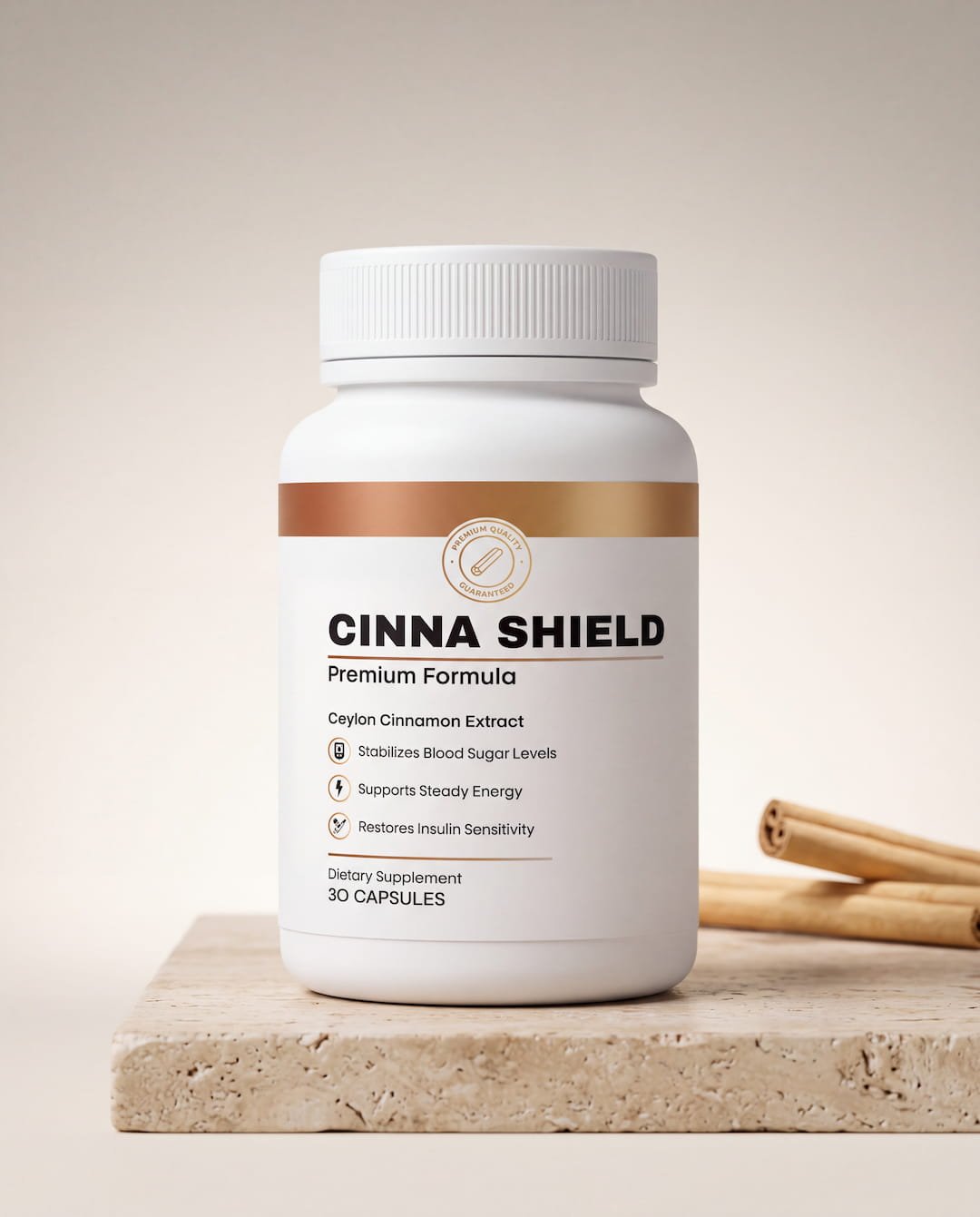
Try Cinna Shield with 90 days to decide
DNA-verified Ceylon cinnamon, 12:1 extract in MCT oil, one capsule a day. 6 bottles for $119.93 or 4 for $109.96 with free shipping, and a 90-day money-back guarantee.
Check today’s offer →